Where draftsmanship meets design vision
Residential architecture has always been a conversation between intention and execution — between the architect's vision and the contractor's hand. In that conversation, the drawing is the translator. A well-drawn set of construction documents does more than describe a building; it removes ambiguity, accelerates approvals, and protects the design intent from the first stud to the final trim.
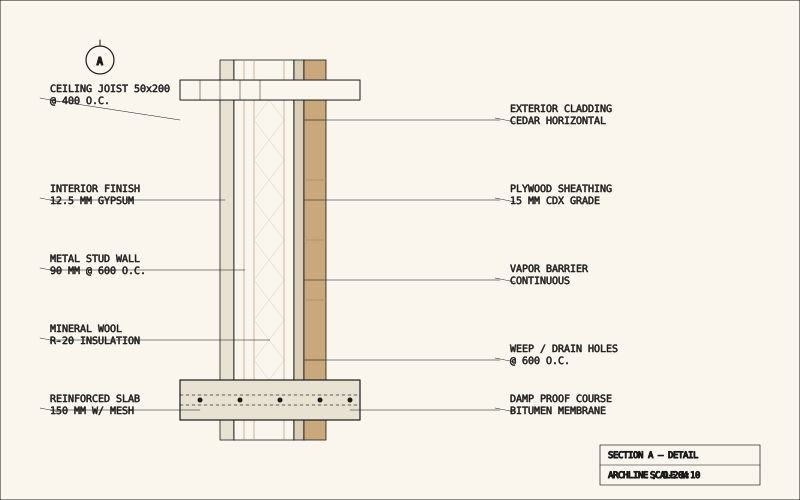
At Cadeonn, we treat every line as a decision. A wall hatch isn't decoration — it specifies an assembly. A dimension isn't a number — it's a contractual commitment to a tolerance. This is the discipline of precision drafting, and it is the invisible architecture of every successful build.
The importance of spatial accuracy
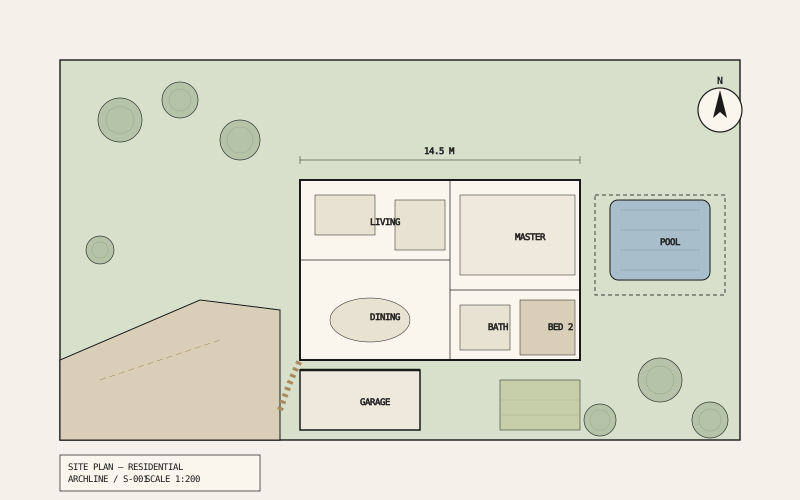
Residential projects sit at a unique intersection of constraints. Lot setbacks, structural spans, plumbing chases, mechanical clearances, and aesthetic ambitions all converge in floor plates that are often less than two thousand square feet. There is no room for sloppy dimensioning. A quarter-inch error in a wet wall can cascade into a finish carpenter's nightmare; a missed clearance can force a permit revision halfway through framing.
Every line drawn is a decision made — precision in drafting is the invisible architecture of great design.
That's why we begin every residential project with field verification. Whether it's an as-built survey of an existing structure or a fresh site measurement, we anchor the drawing set in real, measurable conditions before a single design line is laid down.
How BIM is reshaping the residential workflow
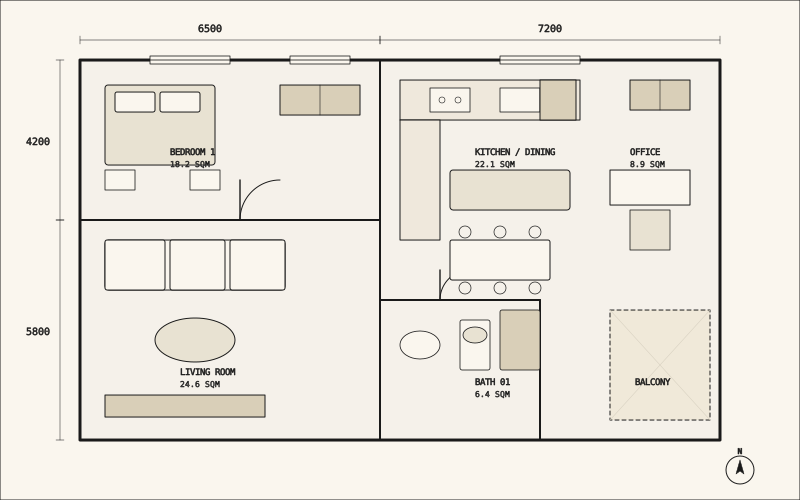
For decades, residential drafting was the domain of 2D CAD — flat plans, sections, and elevations stitched together by reference and convention. Building Information Modeling changes the math entirely. A BIM-native workflow produces a single coordinated model from which every sheet is derived: change a wall thickness, and every plan, section, and quantity takeoff updates in lockstep.
For residential clients, this means fewer coordination errors, faster revision cycles, and richer documentation handed over to the trades. It also means we can hand a fabricator a millwork schedule generated directly from the model — not retyped, not re-measured, just true.
Key principles for drafting excellence
- Disciplined layer and view management — every drawing reads cleanly at every scale.
- Accurate scale representation — print scales drive line weights, not the other way around.
- Material callouts paired with specifications — no detail orphans.
- Coordinated structural and MEP overlays — the trades see one truth.
- Iterative review cycles with the design team — drawings get sharper, not heavier.
Modern interior spaces, drawn well
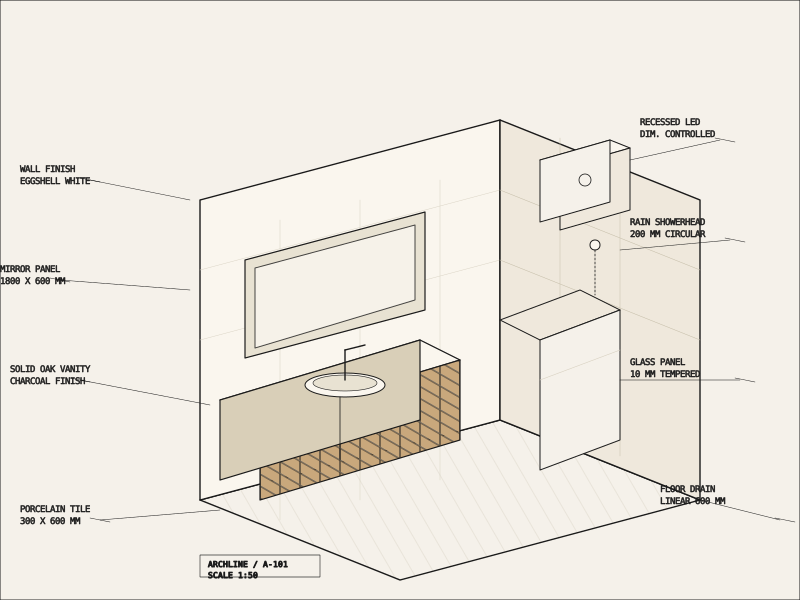
The best residential interiors feel inevitable — as if the room had always been that proportion, that material, that exact bench depth. That feeling is the residue of precision. When the drafting team gets the geometry right, the builder gets the execution right, and the architect's intent survives intact from concept through certificate of occupancy.
That's the standard Cadeonn holds itself to. Every project. Every line.